
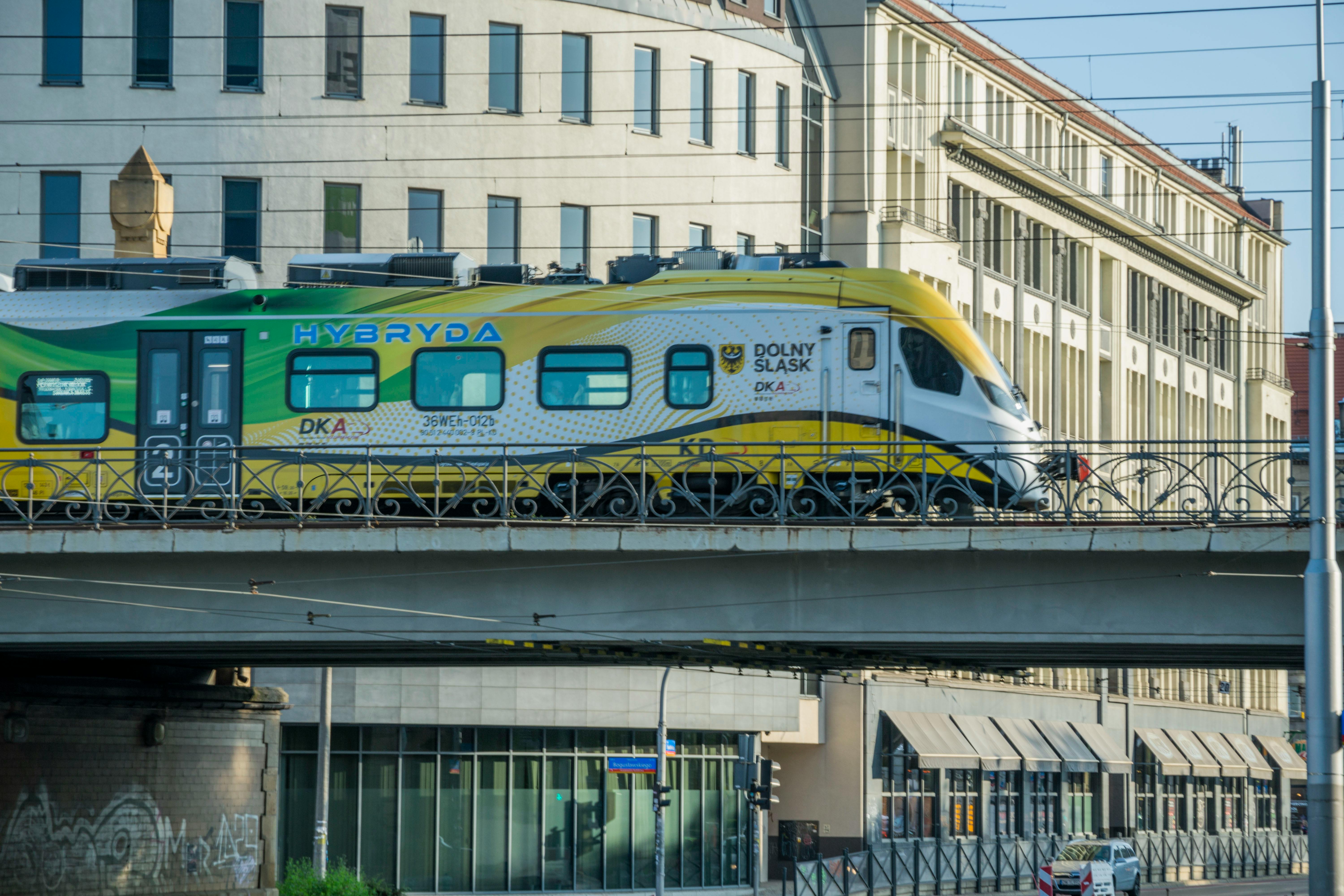
Hybrid vehicles reverse the usual pattern in which town driving is the least economical. The reason is that the system targets exactly the losses urban driving creates.
Idling produces work without motion
An engine at a standstill continues to consume fuel to overcome its own friction and to drive ancillaries, producing no forward progress at all.
In congested conditions this can account for a substantial portion of a journey's total running time.
A hybrid switches the engine off entirely in these periods, drawing on the battery for climate control and electrical demand, which removes the loss rather than reducing it.
Braking energy is recovered instead of discarded
Every deceleration in a conventional vehicle converts the vehicle's momentum into heat at the brake discs, where it is lost.
Urban driving involves frequent decelerations from moderate speeds, which is where recoverable energy is most abundant.
A hybrid captures a meaningful share of that energy and returns it during the next acceleration, so the same energy does useful work more than once.
Engines are least efficient at low load
A petrol engine throttles its intake to reduce power, and that throttling itself consumes energy, so light-load running is disproportionately wasteful.
Town driving keeps an engine at low load for long periods, precisely where its efficiency is worst.
Hybrid control avoids this by either shutting the engine off or running it harder while storing the surplus, which moves it into a more efficient operating region.
Transmission behaviour reinforces this. A conventional automatic spends urban driving cycling through low ratios and slipping at crawling speeds, whereas a hybrid transmission can hold the engine at a chosen speed independently of road speed, or disconnect it altogether, so the losses from constantly rematching engine speed to a changing pace largely disappear.
Motorway driving offers far less to recover
At a steady cruise there is no idling to eliminate and very little braking from which to recover energy.
The engine is also already operating near its efficient region, so there is little for the control system to improve.
The hybrid hardware still has to be carried, so a hybrid at sustained high speed can consume similarly to or slightly more than an equivalent conventional vehicle.
Which is why official figures mislead in both directions
Test cycles combine urban and extra-urban phases in fixed proportions, which may not resemble any individual driver's pattern.
A driver whose journeys are almost entirely urban will frequently better the published figure, which is unusual for any vehicle type.
A driver covering long motorway distances will fall short of it, and would likely have been better served by a different powertrain altogether.