
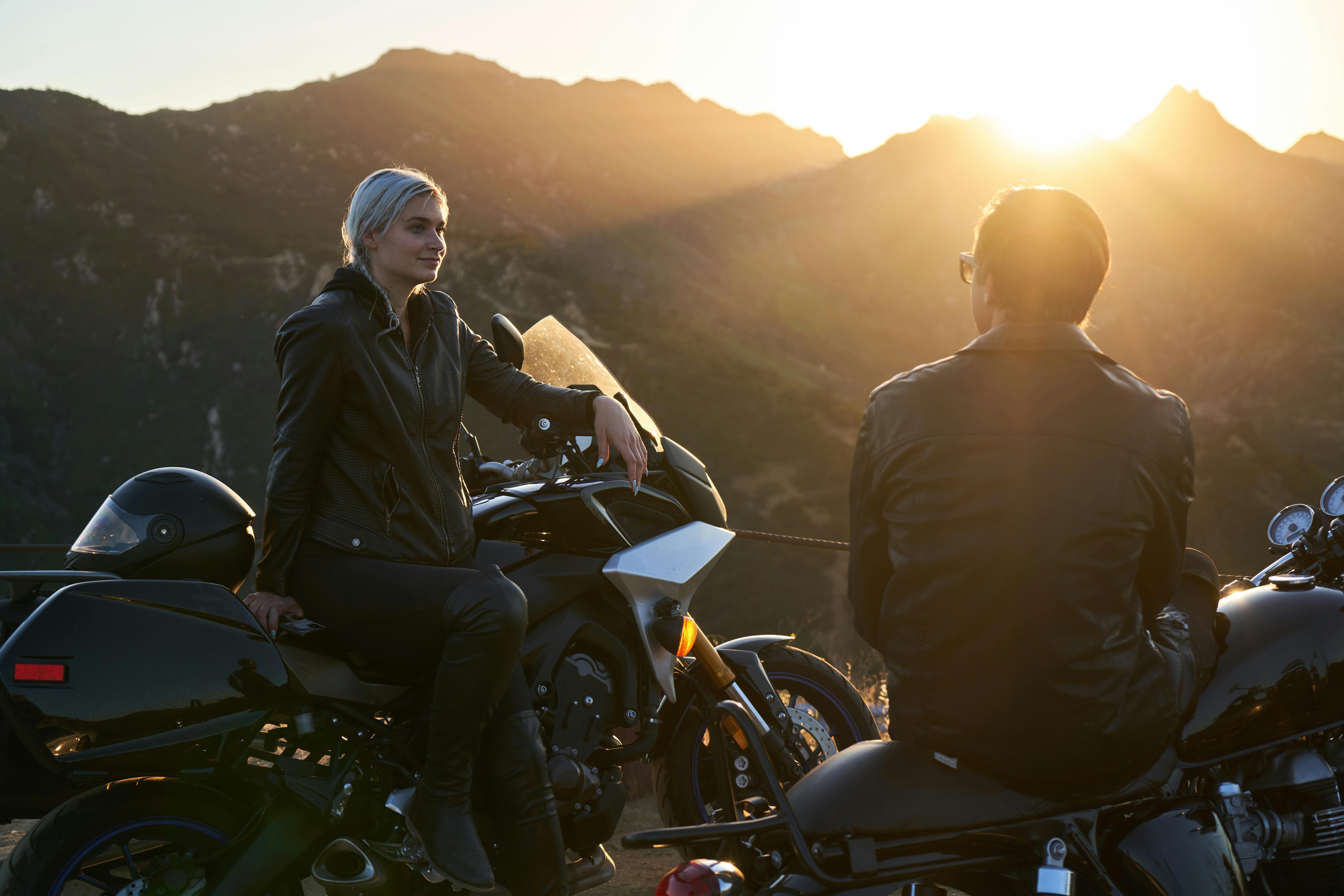
The cruiser riding position looks like a styling choice and is largely a functional one. It was shaped by the kind of riding American roads encourage: long, straight and continuous.
Feet forward changes where weight lands
Forward controls put the rider's feet ahead of the hips, so body weight rests on the base of the spine and the seat rather than being carried partly by the legs.
On a sportbike the legs are folded beneath the rider and absorb bumps like a second suspension. The cruiser gives that up in exchange for an open, unfolded hip angle.
Over an hour the difference is minor. Over six hours it is decisive, because a folded knee joint held at one angle becomes uncomfortable long before an extended one does.
Low seats trade ground clearance for confidence
A low seat height lets more riders get both feet flat at a stop, which matters at every gas station and traffic light and is a genuine reason people choose these machines.
The cost is lean angle. A low chassis with long suspension travel runs out of clearance early, and floorboards or pegs touch down at modest angles.
That limit is acceptable on the roads these bikes are ridden on, where sustained hard cornering is rare and stability at speed matters more than the last few degrees of lean.
Wide bars leverage the front end
Wide handlebars give mechanical advantage over the steering, which makes a heavy motorcycle easier to place at low speed and easier to hold straight at highway pace.
They also open the chest, which is comfortable at moderate speed but turns the rider into a sail as speed rises. Wind pressure on the torso becomes the limiting factor.
Fairings and windshields exist largely to solve that, transferring load off the rider's arms and shoulders so the position stays sustainable at interstate speeds.
Long wheelbase buys stability
Cruisers are long, and length resists changes of direction, including the unwanted ones caused by pavement seams, crosswinds and the wake of passing trucks.
That same length makes the machine slow to turn, which is why cruisers reward smooth planned inputs rather than the quick flicks that suit a shorter chassis.
Rake and trail are set generously for the same reason, giving the front end a strong self-centering tendency that keeps the bike tracking with little rider input.
The engine character is part of the ergonomics
Large-displacement engines tuned for low-rpm torque let a rider hold a gear through speed changes without shifting, which reduces the physical workload on a long day.
Low engine speed at cruise also lowers vibration frequency, and the resulting pulse is a fundamental part of what riders describe as the character of these machines.
Taken together the package is coherent: every element that limits it in tight corners is the same element that makes it comfortable across a long stretch of open road.