
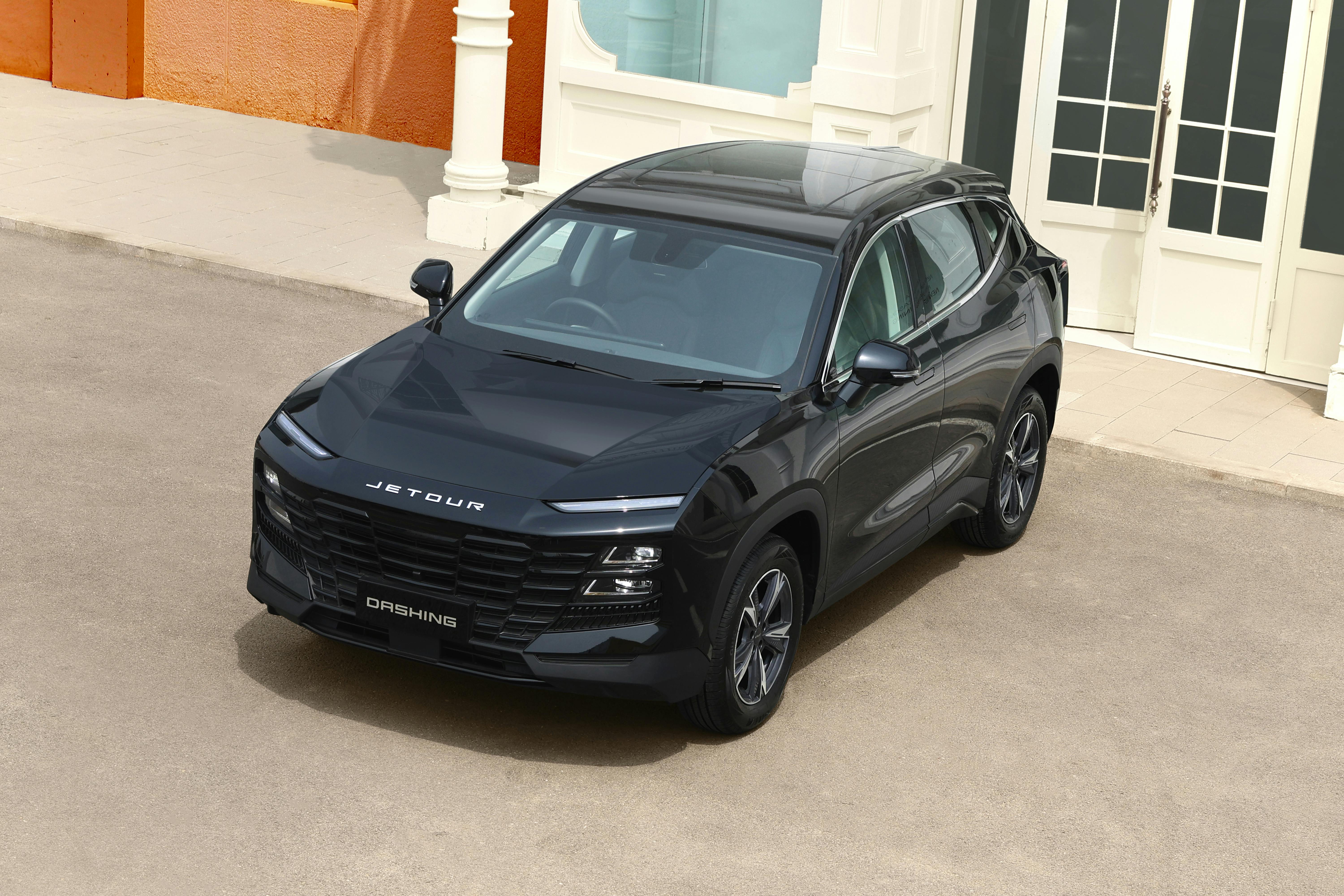
Vehicles have become substantially heavier over recent decades, and the consequences are physical rather than a matter of opinion.
Stopping distance
Kinetic energy rises with mass.
Which means more energy for the brakes to dissipate.
Modern braking systems compensate substantially and not entirely.
Centre of gravity
Higher vehicles transfer more weight laterally in corners.
Which affects stability and is why electronic stability control matters more here.
Consumables
Tyres and brakes wear faster on heavier vehicles.
Which is a running cost difference that is easy to overlook.
Efficiency
Moving more mass requires more energy.
Which applies to combustion and electric vehicles alike.
Frontal area and aerodynamics compound the effect at higher speeds.
Road wear
Damage to road surfaces rises sharply with axle load.
Which is a public cost rather than a private one.
Crash compatibility
Impacts between vehicles of very different mass.
Which favours the heavier vehicle's occupants and disadvantages the lighter one's.
Regulators in several regions have begun examining this.
Pedestrian outcomes
Higher, blunter front ends produce different injury patterns.
Which appears in casualty data and has driven design rule changes.
What buyers can weigh
Genuine need for space and capability against the running cost and handling consequences.
Why vehicles got heavier
Safety structures, equipment, larger sizes and battery packs.
Which are mostly the result of things buyers and regulators wanted.
The trend is consistent across nearly every segment, not only large vehicles.
Electric vehicle mass
Battery packs adding several hundred kilograms.
Which is offset by a low centre of gravity.
Tyre wear on heavier electric vehicles is measurably higher and produces particulate emissions.
Infrastructure
Multi-storey car parks designed for lighter fleets.
Which has prompted structural assessments in several countries.
Licensing and regulation
Weight-based taxation and licence categories.
Which some jurisdictions have introduced or are considering.
Choosing sensibly
The smallest vehicle that genuinely meets your needs costs less to run in every category.
Braking distance in numbers
Energy to dissipate rises with the square of speed and linearly with mass.
Which means a heavier vehicle at the same speed needs more work from the brakes.
Modern systems handle this well in a single stop and less well in repeated ones.
Emergency avoidance
Changing direction quickly with more mass and a higher centre of gravity.
Which is where the handling difference is most consequential.
Stability control has reduced rollover rates substantially and not eliminated the physics.
Towing and payload
Where heavier vehicles genuinely earn their mass.
Which is a real requirement for some owners and not for most.
Fuel and energy consumption
Consistently higher across every measured cycle.
Which compounds over years of ownership.
The honest position
Heavier vehicles protect their own occupants well, cost more to run, and impose costs on others.
Which is a trade worth making deliberately rather than by default.
Visibility from the driving position
Higher seating improves distance vision and worsens close-range visibility.
Which is measurable and appears in casualty data involving children and cyclists.
Camera systems partly compensate and depend on being used.
Parking and manoeuvring
Larger footprints against unchanged parking infrastructure.
Which is a daily practical cost of size rather than of weight specifically.
Suspension and component life
Bushes, bearings and dampers carrying more load.
Which shortens service life in ordinary use.
Making the trade deliberately
List what you actually need the vehicle to do over a year.
Which for most households is a shorter list than the vehicle purchased.
Occasional needs can frequently be met by hiring rather than owning.
Where the debate goes wrong
Arguments about vehicle size tend to become arguments about the people who buy them.
Which obscures a set of measurable physical effects that are not really contested.
Heavier vehicles take longer to stop, wear consumables faster, use more energy and change crash outcomes for others.
The summary
The physics is straightforward and the choice is personal, and making it with the trade-offs in view is better than making it by default.
A general note on sources
Figures in this area come from manufacturer publications, regulator test programmes, insurance claims data and independent consumer testing, and those four sources do not always agree.
Where they conflict, the independent testing and the real-world claims data are usually the more reliable guide, because manufacturer figures are produced under conditions chosen by the manufacturer.
Anything specific to your own vehicle should be checked against its handbook and against a qualified technician familiar with the model, since specifications differ between markets and between production years in ways that general articles cannot capture.
One last practical point
Almost everything above becomes easier if you keep a simple record for your own vehicle: what was done, when, at what mileage and by whom.
It takes a folder and about five minutes a year, and it improves resale value, makes warranty claims straightforward and turns vague worries about condition into questions you can actually answer.
Owners who do this rarely get caught out, and owners who do not almost always wish they had started earlier.