
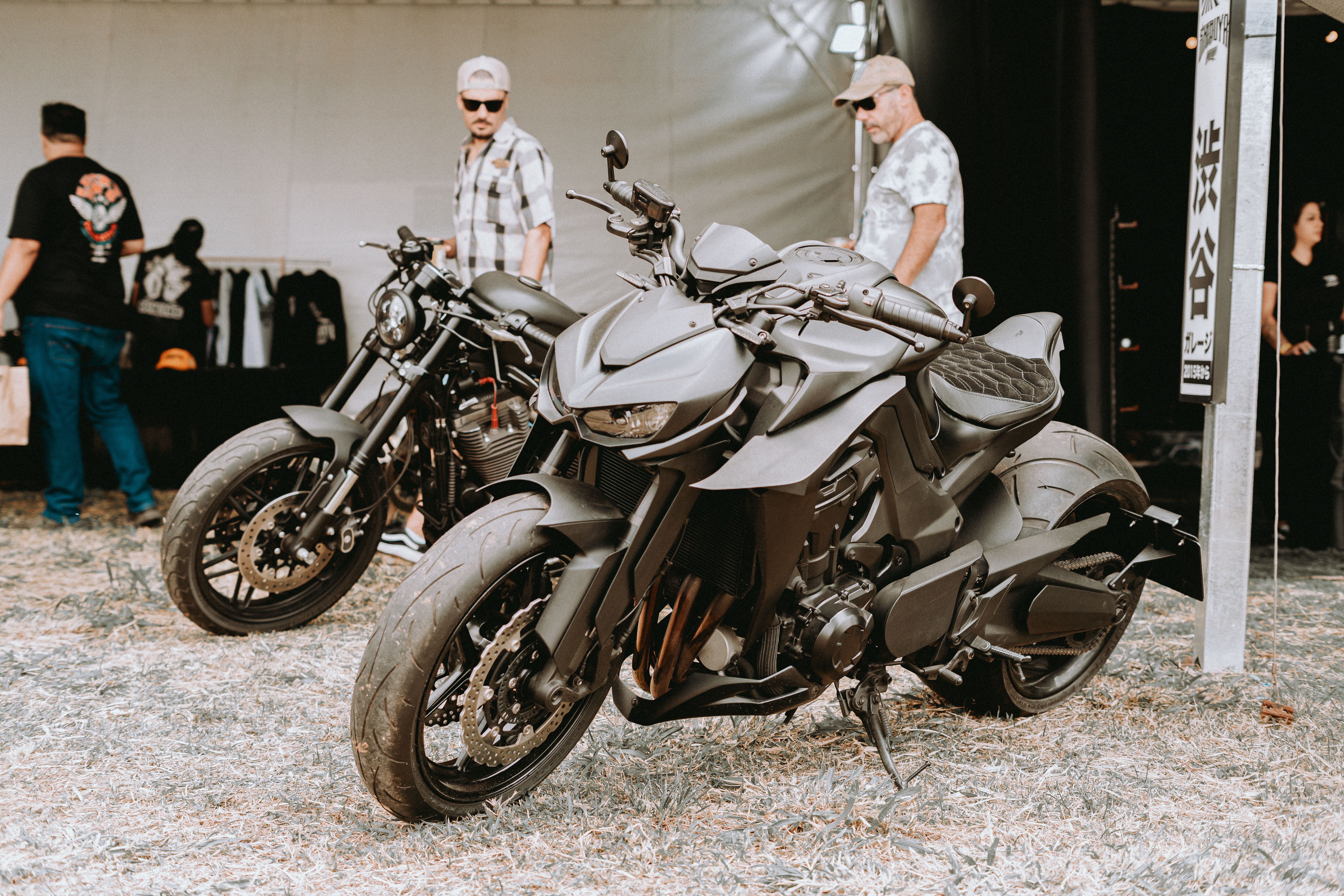
Dive into the future of two-wheeled exhilaration! In 2026, AI-Powered Advanced Rider Assistance Systems (ARAS) are no longer sci-fi – they're revolutionizing motorcycle safety, accident prevention, and rider confidence. Discover the best smart motorcycle tech, comparing cutting-edge collision avoidance, blind spot detection, and adaptive cruise control systems that every rider needs to know about for ultimate protection and performance. Compare ARAS options and book your upgrade today!
Introduction to the Topic
Imagine a ride where your motorcycle doesn't just respond to your commands, but actively anticipates danger, warns you of unseen threats, and even assists in avoiding collisions. In 2026, this isn't a futuristic fantasy; it's the reality brought to you by Artificial Intelligence-Powered Advanced Rider Assistance Systems (ARAS). For decades, motorcycle safety focused on passive protection – helmets, jackets, and robust frames. While essential, these elements reacted to an accident. ARAS, however, represents a paradigm shift, moving towards proactive, intelligent prevention.
The thrill of motorcycling is inherently linked to freedom and the raw connection to the road. Yet, every rider understands the inherent risks. ARAS aims to mitigate these risks not by taking away control, but by augmenting the rider's senses and reaction capabilities, acting as an ever-vigilant co-pilot. From adaptive cruise control that intelligently maintains distance to blind spot detection that sees what you might miss, and even predictive braking assist, these systems are transforming how we interact with our bikes and the road. This article will delve into the cutting-edge of ARAS technology in 2026, exploring its benefits, comparing the leading systems, and peering into the exciting future of motorcycle safety and performance.
Backgrounds & Facts
Advanced Rider Assistance Systems (ARAS) are sophisticated electronic systems that utilize a suite of sensors, processors, and actuators to assist riders in various situations, primarily enhancing safety and comfort. While rudimentary forms like Anti-lock Braking Systems (ABS) and Traction Control (TC) have been around for years, the true revolution began with the integration of radar, lidar, cameras, and ultrasonic sensors, all powered by advanced Artificial Intelligence algorithms.
By 2026, ARAS systems are capable of real-time environmental mapping. Front and rear radars continuously scan for vehicles, obstacles, and potential hazards, while cameras provide visual data for lane keeping and object recognition. AI algorithms then process this torrent of data at lightning speed, identifying patterns, predicting trajectories, and determining potential risks. The system can then alert the rider through visual cues (dashboard displays, helmet projections), haptic feedback (vibrating handlebars), or even auditory warnings. In more advanced scenarios, ARAS can initiate subtle interventions like pre-charging brakes or adjusting throttle response.
Motorcycle accident statistics have historically been sobering. Common causes include blind spot collisions, rear-ending incidents, sudden braking scenarios, and loss of control in challenging conditions. ARAS directly addresses these vulnerabilities: Blind Spot Detection (BSD) eliminates crucial blind spots, Adaptive Cruise Control (ACC) reduces fatigue and maintains safe following distances, and Front Collision Warning (FCW) with potential Emergency Braking Assist (EBA) can significantly reduce the severity, or even prevent, front-impact collisions. These technologies aren't just about preventing crashes; they're about reducing rider stress, enhancing situational awareness, and ultimately, making every journey safer and more enjoyable.
Expert Opinion / Analysis
“By 2026, ARAS has matured beyond simple alerts. We're seeing sophisticated predictive analytics that can differentiate between a car changing lanes aggressively and a harmless roadside object. The challenge now is seamless integration that enhances, rather than detracts from, the pure riding experience. The goal isn't to take control from the rider, but to augment their senses and reaction time,” explains Dr. Lena Petrova, a leading expert in autonomous systems and motorcycle dynamics at the Global Institute for Rider Safety. “Early concerns about 'too much tech' interfering with the ride are largely being addressed through intelligent system design that prioritizes rider input and discretion.”
Dr. Petrova emphasizes that the success of ARAS lies in its ability to be a 'silent guardian' – present and active, but only intervening when truly necessary. “The AI models are trained on millions of real-world riding scenarios, enabling them to understand the nuances of motorcycle dynamics and rider intent. This allows for highly contextual and intelligent assistance, rather than generic warnings.” She also points out the evolving ethical landscape. “As ARAS becomes more integrated, discussions around data privacy, system responsibility in rare malfunction scenarios, and the psychological impact on rider skill development are paramount. It's a balance between embracing innovation for safety and preserving the core essence of motorcycling.” The general consensus among experts is that ARAS, in its current form, is a powerful tool for safety enhancement, empowering riders with more information and faster reaction times, without compromising the fundamental joy of being in control of their machine.
💰 Best Options in Comparison (VERY IMPORTANT)
The market for ARAS-equipped motorcycles and aftermarket solutions has exploded by 2026, offering riders more choices than ever. Whether you're in the market for a brand-new bike with integrated systems or looking to upgrade your current ride, here are some of the leading options:
- BMW Motorrad's "Rider Guardian Pro" (Integrated System): BMW remains at the forefront, with their Rider Guardian Pro suite standard on many premium models. It features highly refined radar-based Adaptive Cruise Control (ACC), a comprehensive Front Collision Warning (FCW) system with integrated Emergency Braking Assist (EBA), and a precise Blind Spot Detection (BSD) system. BMW's strength lies in its seamless, unobtrusive integration, providing a natural extension of the rider's capabilities.
- KTM's "MotoMind AI" (Integrated System): KTM's approach with MotoMind AI focuses on dynamic, performance-oriented riding, particularly for adventure and off-road segments. While offering ACC and BSD, their unique "Trail Assist" uses AI to analyze terrain and suggest optimal lines or adjust power delivery for enhanced control. Their systems are designed to be robust and perform well even in challenging environments, complementing their 'Ready To Race' philosophy.
- Ducati's "Corse Safety Suite (CSS) 3.0" (Integrated System): For the performance enthusiast, Ducati's CSS 3.0 takes ARAS to the track and winding roads. Building on their advanced cornering ABS and traction control, CSS 3.0 introduces "Predictive Cornering Assist" – using GPS, lean angle sensors, and real-time road condition data to provide early warnings for hazardous turns or excessive speed into corners. Their ACC is tuned for aggressive riding styles, maintaining safety without dampening the thrill.
- RideTech Solutions' "Sentinel-X Universal ARAS Upgrade Kit" (Aftermarket): Not everyone needs a new bike. RideTech Solutions offers a groundbreaking aftermarket solution for a wide range of motorcycles. The Sentinel-X kit includes universal radar modules (front and rear), a compact AI processing unit, and a discreet handlebar-mounted display. It provides essential features like Blind Spot Detection, Front Collision Warning, and a basic Adaptive Cruise Control, making advanced safety accessible to a broader market. Professional installation is highly recommended to ensure proper calibration.
Ready to upgrade your ride? Visit your local dealer today or explore authorized aftermarket installers!
| Feature/System | BMW Rider Guardian Pro | KTM MotoMind AI | Ducati Corse Safety Suite 3.0 | RideTech Sentinel-X (Aftermarket) |
|---|---|---|---|---|
| Adaptive Cruise Control (ACC) | ✅ Full-range, integrated | ✅ Off-road optimized | ✅ High-performance tuning | ✅ Basic, lane-specific |
| Blind Spot Detection (BSD) | ✅ Radar-based | ✅ Radar-based | ✅ Radar-based | ✅ Universal radar |
| Front Collision Warning (FCW) | ✅ Visual & Haptic | ✅ Visual & Audio | ✅ Visual & Haptic | ✅ Visual & Audio |
| Emergency Braking Assist | ✅ Integrated, smart | ❌ (Focus on rider input) | ✅ Advanced, lean-sensitive | ❌ (Warning only) |
| Unique Features | Lane Change Warning | Trail Assist, Off-road ACC | Predictive Cornering Assist | Universal Fit, Modular Design |
| Target Rider | Touring, Commuting | Adventure, Off-road | Sport, Performance | Any rider seeking upgrade |
| Estimated Cost (2026) | Integrated in premium models (e.g., R 1300 GS) | Standard on high-end Adv models | Optional on flagship models (~$2,500) | ~$1,800 - $2,500 (plus installation) |
| Where to Buy/Install | BMW Dealers | KTM Dealers | Ducati Dealers | Authorized Installers |
Outlook & Trends
The evolution of ARAS is far from over. Looking beyond 2026, several exciting trends are on the horizon. Vehicle-to-Vehicle (V2V) and Vehicle-to-Infrastructure (V2I) communication will allow motorcycles to share real-time data with other road users and smart city infrastructure. This means your bike could receive warnings about unseen hazards around a blind corner or upcoming traffic jams long before its own sensors detect them, creating a truly connected riding ecosystem.
Another major development is the integration of Augmented Reality (AR) helmets. Imagine ARAS warnings, navigation cues, and even predictive hazard overlays projected directly onto your visor, seamlessly blending with your field of vision. Furthermore, AI-driven predictive maintenance is emerging, using ARAS sensors to monitor component wear and tear, alerting riders to potential issues before they become critical. We may also see more advanced self-balancing or stability assist systems, particularly for low-speed maneuvers, making heavy touring bikes more manageable for a wider range of riders. The industry is also moving towards standardization of ARAS features, ensuring a baseline level of safety and interoperability across brands. As these technologies mature, the goal remains clear: to create an even safer, more intelligent, and ultimately, more fulfilling riding experience for everyone.
Conclusion
The year 2026 marks a pivotal moment in motorcycle safety, largely thanks to the rapid advancements in AI-Powered Advanced Rider Assistance Systems. These aren't just gadgets; they are sophisticated, intelligent co-pilots that significantly enhance situational awareness, reduce rider fatigue, and most importantly, prevent accidents. From integrated factory systems that seamlessly blend with your bike's DNA to innovative aftermarket solutions, there's an ARAS option for nearly every rider and motorcycle. By embracing this technology, we're not just buying a feature; we're investing in a future where the thrill of the open road is coupled with unparalleled peace of mind. Don't just ride, ride smart. Explore the ARAS revolution today and experience the next level of motorcycle safety and confidence!