
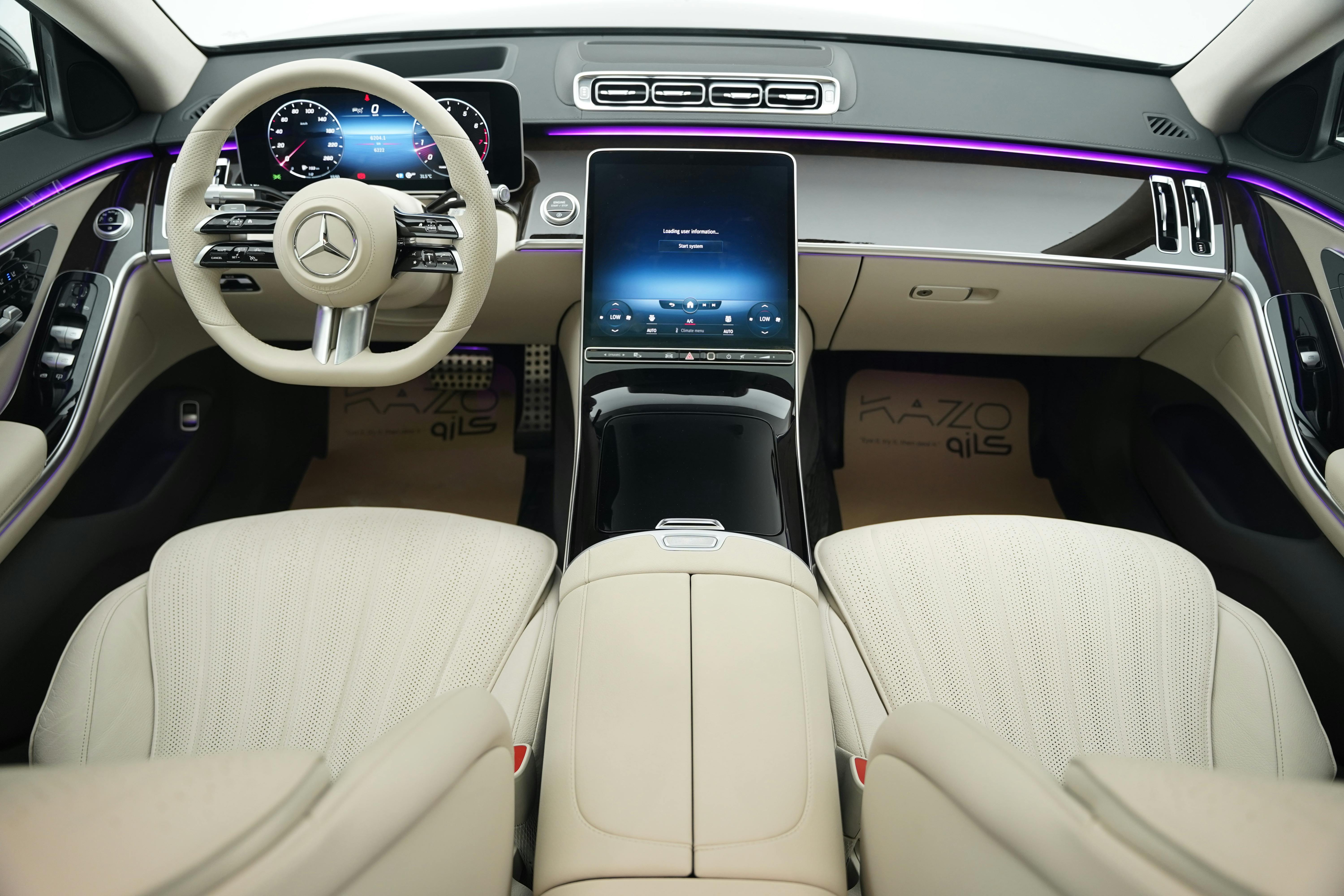
In 2026, the promise of self-driving cars is closer than ever, but navigating the complex world of Advanced Driver-Assistance Systems (ADAS) and emerging Level 3 autonomy can be daunting. This ultimate buyer's guide cuts through the hype, comparing the top AI-driven ADAS features and autonomous driving solutions from leading manufacturers, helping you make the smartest purchase for safety, convenience, and the future of mobility. Discover the best smart car tech available now!
Introduction to the Topic
Welcome to 2026, where the hum of electric vehicles is increasingly joined by the quiet confidence of advanced artificial intelligence guiding our journeys. The dream of autonomous driving, once confined to science fiction, is now a tangible reality influencing every new car purchase. But what does "self-driving" truly mean today? And how do you discern genuine innovation from clever marketing in the rapidly evolving landscape of Car Tech?
This year marks a pivotal moment. Advanced Driver-Assistance Systems (ADAS) have moved beyond simple cruise control, becoming sophisticated co-pilots. We're witnessing the widespread adoption of Level 2+ systems and the exciting, albeit cautious, rollout of true Level 3 conditional autonomous driving. For savvy consumers like you, understanding these distinctions, comparing the best options, and recognizing genuine value is paramount. This comprehensive guide will equip you with the knowledge to navigate the AI driver revolution, ensuring your next vehicle isn't just a mode of transport, but a smart, safe, and future-proof investment.
Backgrounds & Facts
The journey towards full autonomy is defined by six levels, from Level 0 (no automation) to Level 5 (full automation under all conditions). By 2026, Level 2 ADAS, which combines features like Adaptive Cruise Control and Lane Keeping Assist, is standard across most new vehicles, offering significant driver comfort and safety enhancements. These systems require the driver to remain fully engaged and ready to take over at any moment – hence the term "driver assistance."
The real game-changer in 2026 is the growing availability and refinement of Level 3 systems. Unlike Level 2, Level 3 grants the vehicle conditional autonomy under specific circumstances, such as congested highways or particular road networks. During these conditions, the driver is permitted to disengage from driving tasks, perhaps watching a movie or checking emails, but must be prepared to intervene when prompted by the system. This shift in legal responsibility, from driver to manufacturer during Level 3 operation, is a monumental step forward, underpinned by sophisticated sensor arrays and powerful AI.
Key technologies powering this revolution include an intricate blend of sensors: high-resolution cameras for visual data, radar for object detection and speed, ultrasonic sensors for close-range detection, and increasingly, LiDAR for precise 3D mapping and object recognition, especially in challenging light conditions. These sensors feed colossal amounts of data to on-board AI processors, which use machine learning algorithms to perceive the environment, predict behaviors, and make real-time driving decisions. The integration of 5G connectivity further enhances these systems, enabling Vehicle-to-Everything (V2X) communication for improved safety and traffic flow, receiving real-time map updates, and over-the-air (OTA) software enhancements that continuously improve vehicle capabilities.
Expert Opinion / Analysis
"The biggest hurdle for Level 3 adoption isn't just technological, it's psychological and regulatory," explains Dr. Anya Sharma, a leading expert in autonomous systems ethics and safety at the Institute for Future Mobility. "Manufacturers have largely solved the 'how to drive' problem in specific domains. Now, it's about managing the human-machine handover, building public trust, and harmonizing international regulations." Dr. Sharma points to the critical importance of robust driver monitoring systems (DMS) that ensure the driver is truly ready to intervene when needed, a feature now mandatory for Level 3 certification in many regions.
Industry analyst Mark Jenkins of AutoTech Insights highlights the evolving business model: "We're seeing a clear trend towards 'autonomy as a service.' While basic ADAS features are standard, advanced Level 3 capabilities, or even enhanced Level 2+ packages, are increasingly offered as subscription services. This allows manufacturers to continuously fund R&D and provide ongoing software updates, but it also means consumers need to factor in recurring costs when evaluating their purchase." This subscription model, while potentially increasing lifetime costs, also promises a perpetually improving driving experience as AI algorithms become smarter and more refined over time.
The debate around sensor suites also continues. "While camera-only systems have made incredible strides, the industry consensus is moving towards sensor fusion – combining cameras, radar, and LiDAR for true redundancy and robustness, especially for Level 3 and beyond," states Eng. Kenji Tanaka, Chief Autonomous Systems Architect at a major automotive supplier. "Lidar's ability to create precise 3D point clouds, independent of lighting conditions, provides a critical safety layer that complements camera vision and radar capabilities, significantly reducing edge-case risks."
💰 Best Options in Comparison (VERY IMPORTANT)
As of 2026, several automotive giants are leading the charge in advanced ADAS and autonomous driving. Here’s a comparison of the top contenders, focusing on what they offer for the discerning buyer:
-
Mercedes-Benz DRIVE PILOT (Level 3)
The trailblazer in regulated Level 3 autonomy. Available in select S-Class and EQS models, DRIVE PILOT allows drivers to legally disengage in heavy traffic on approved highways up to 40 mph (60 km/h) in certain markets. The vehicle takes full responsibility during operation, and if the driver fails to respond to a handover request, the car safely pulls over. This system leverages redundant steering, braking, and power supply, along with a comprehensive sensor suite including LiDAR, cameras, radar, and an advanced DMS. It's an expensive option but offers true conditional autonomy where permitted.
-
GM Ultra Cruise (Level 2+ / Level 3 Aspirant)
Building on the success of Super Cruise, GM's Ultra Cruise expands hands-free driving to millions of miles of roads across North America, including city streets and undivided highways. While technically still a Level 2+ system requiring driver supervision, its capabilities blur the lines towards Level 3, with features like automatic lane changes, evasive steering, and enhanced navigation. GM emphasizes a robust sensor array and a sophisticated driver attention system. It's available on Cadillac, Chevrolet, and GMC models, offering broad accessibility to advanced hands-free driving.
-
Ford BlueCruise (Level 2+)
Ford's BlueCruise offers hands-free driving on designated "Blue Zones" – over 130,000 miles of pre-mapped highways in North America. Its strength lies in its user-friendliness and continuous improvement via OTA updates. BlueCruise utilizes a forward-facing camera and radar, coupled with an infrared driver-facing camera to ensure driver attention. It's a highly competitive Level 2+ system, increasingly available across Ford's popular F-150, Mustang Mach-E, and Expedition lines, providing excellent value for a widely accessible hands-free experience.
-
Tesla Full Self-Driving (FSD) Beta (Level 2+)
Tesla's FSD Beta, despite its name, remains a Level 2+ system that requires constant driver supervision and intervention. Its unique approach relies almost exclusively on camera vision and an AI neural network trained on vast amounts of real-world driving data. FSD Beta aims for end-to-end autonomy, including city driving, traffic light and stop sign control, and complex intersections. While highly capable and continuously evolving through its beta program, users must understand it's a driver assistance feature, not an autonomous driver, and carries a significant upfront or subscription cost.
-
Hyundai Highway Driving Assist 2 (HDA 2) (Level 2+)
Hyundai and its sister brands (Kia, Genesis) offer HDA 2, a highly praised Level 2+ system that combines adaptive cruise control with lane-centering and automatic lane changes. It leverages radar, cameras, and navigation data for smooth, confident highway driving. While not hands-free like BlueCruise or Ultra Cruise, HDA 2 provides exceptional comfort and safety features at a competitive price point, often included in higher trim levels. Its predictive capabilities and natural driving feel make it a top choice for mainstream buyers seeking advanced assistance.
To help you compare these cutting-edge systems, here's a detailed breakdown:
| Feature/System | Mercedes-Benz DRIVE PILOT | GM Ultra Cruise | Ford BlueCruise | Tesla FSD Beta | Hyundai HDA 2 |
|---|---|---|---|---|---|
| Autonomy Level (Current) | Level 3 (Conditional) | Level 2+ (Hands-Free) | Level 2+ (Hands-Free) | Level 2+ (Supervised) | Level 2+ (Assisted) |
| Hands-Free Driving | Yes (Driver can disengage) | Yes (Driver must supervise) | Yes (Driver must supervise) | Yes (Driver must supervise) | No (Hands-on required) |
| Driver Monitoring System | Advanced Eye-Tracking & Head Position | Infrared Eye-Tracking & Head Position | Infrared Eye-Tracking | Camera-based Eye-Tracking | Steering Wheel Sensor & Visual Cues |
| Operational Design Domain (ODD) | Approved Highways (Heavy Traffic, up to 40 mph) | Millions of Miles of North American Roads | 130,000+ Miles of Pre-Mapped Highways | Most Roads (City & Highway) | All Highways |
| Key Sensors | Cameras, Radar, LiDAR, Ultrasonic | Cameras, Radar, Ultrasonic | Camera, Radar | Cameras (Vision-only) | Cameras, Radar |
| Cost/Availability | High-end option, S-Class/EQS. Subscription likely. | Premium option, Cadillac/Chevrolet/GMC. | Available on popular models, often bundled. | Significant upfront cost or monthly subscription. | Often standard on mid-to-high trims. |
| Key Differentiator | First legal Level 3, liability shift to manufacturer. | Vast hands-free road network coverage. | Accessible hands-free driving on major routes. | Ambitious full-stack AI, rapid OTA updates. | Excellent value and smooth performance for L2+. |
When considering your purchase, think about your typical driving scenarios. Do you spend hours in bumper-to-bumper traffic where Level 3 could genuinely offer a break? Or are you looking for enhanced comfort on long highway drives? Consider the total cost of ownership, including potential subscription fees for advanced features. We recommend booking a test drive with multiple manufacturers to experience these systems firsthand and see which best suits your driving style and needs.
Outlook & Trends
Looking beyond 2026, the trajectory for autonomous vehicles is clear: more widespread Level 3 deployment, especially in ride-hailing fleets and commercial logistics, and the cautious expansion of geo-fenced Level 4 services. We anticipate more cities approving dedicated zones for fully autonomous shuttles and delivery vehicles.
The integration of Vehicle-to-Infrastructure (V2I) and Vehicle-to-Vehicle (V2V) communication, powered by 5G and future cellular standards, will become increasingly critical. This V2X ecosystem will allow cars to communicate with traffic lights, road sensors, and other vehicles, leading to unprecedented levels of safety, efficiency, and real-time traffic optimization. Imagine a world where your car is alerted to a hidden hazard around a blind corner by another vehicle miles ahead!
Furthermore, expect to see the continued evolution of AI decision-making, with ethics and transparency becoming central to development. "Explainable AI" (XAI) will gain traction, allowing systems to justify their autonomous decisions. The legal and insurance industries will also adapt, with new policies and frameworks emerging to address the complexities of autonomous liability. Ultimately, the future promises a more connected, safer, and perhaps even more enjoyable driving experience, where human and artificial intelligence collaborate seamlessly on our roads.
Conclusion
The AI driver revolution is here, and 2026 is an exhilarating time to be a car buyer. The choice between advanced Level 2+ ADAS and nascent Level 3 autonomous driving systems is no longer a futuristic fantasy but a practical decision. From the hands-off freedom of Ford BlueCruise and GM Ultra Cruise to the conditional autonomy of Mercedes-Benz DRIVE PILOT, the options are more sophisticated and accessible than ever before. Understanding the nuances, comparing the features, and considering your personal driving needs will empower you to make an informed decision.
Don't just buy a car; invest in the future of mobility, safety, and convenience. We encourage you to research these groundbreaking systems further, read user reviews, and most importantly, visit your local dealership to experience these technologies firsthand. The road ahead is smarter, safer, and more autonomous – are you ready for the ride?