
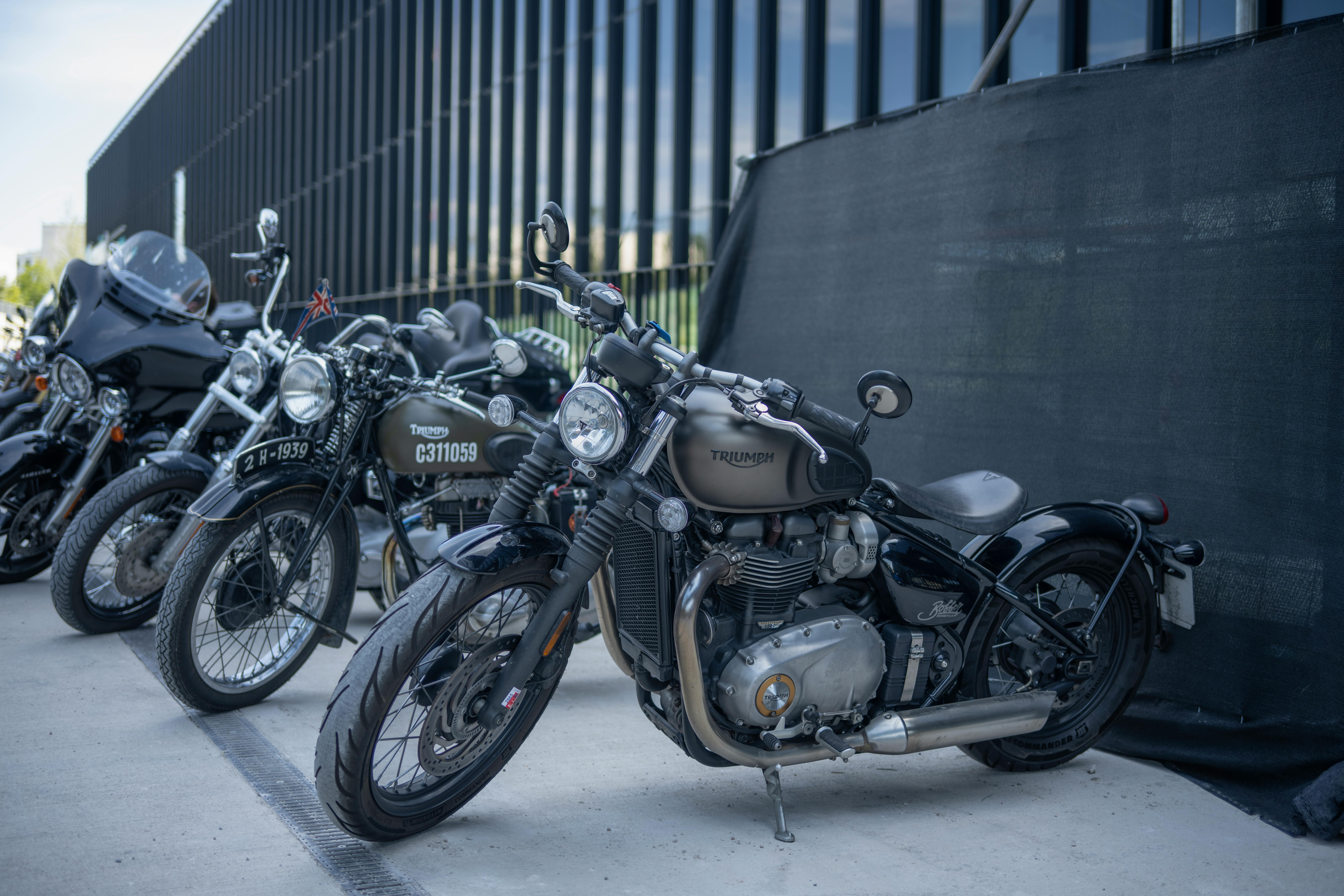
Two motorcycles with similar engines can steer completely differently, and the explanation lies in three chassis dimensions. They interact, and changing one alters the others.
Rake sets the angle the front end works at
Rake is the angle of the steering head from vertical. A steep rake stands the forks upright, and a relaxed rake lays them forward.
Steeper angles make the machine respond quickly to bar input, which suits circuits and tight roads. Relaxed angles slow the response and make the machine settle on a line.
This is why a sports machine and a cruiser look different from the side before any other difference is apparent. The visual signature is the steering geometry.
Trail is what actually creates stability
Trail is the distance between where the steering axis meets the ground and where the front tyre contacts it. The contact patch trails behind the pivot, like a castor.
That offset generates a self-centring force. When the front wheel is disturbed, the geometry works to return it to straight ahead without rider input.
More trail means more self-centring and more effort to turn. Less trail makes a machine responsive and, past a point, nervous under braking or over bumps.
Fork offset separates rake from trail
Because trail depends on rake, wheel size and how far the axle sits ahead of the steering axis, designers use fork offset to tune trail without changing rake.
Increasing offset moves the axle forward and reduces trail, giving quicker steering while keeping the rake angle the packaging requires.
Adjustable triple clamps exist for this reason on racing machines, and it is one of the first changes made when a rider reports the front is slow to turn.
Wheelbase governs how the mass transfers
A long wheelbase resists pitching under acceleration and braking, and it resists a wheelie, which is why drag machines are long and supermotos are short.
It also increases the radius the machine naturally wants to follow, so a long machine requires more lean or more bar pressure for the same corner.
Chain adjustment changes wheelbase slightly, which is a common and often unnoticed side effect of tensioning a chain over the life of a sprocket set.
Ride height ties the dimensions together
Raising the rear or lowering the front steepens rake and reduces trail, sharpening the steering without touching the frame at all.
This is why suspension sag settings change handling so noticeably. A machine sitting low at the rear under a heavy rider has effectively been given a lazier geometry.
It also explains why fitting a low seat or lowering links alters far more than seat height, and why such changes are best made with the full geometry in mind.