
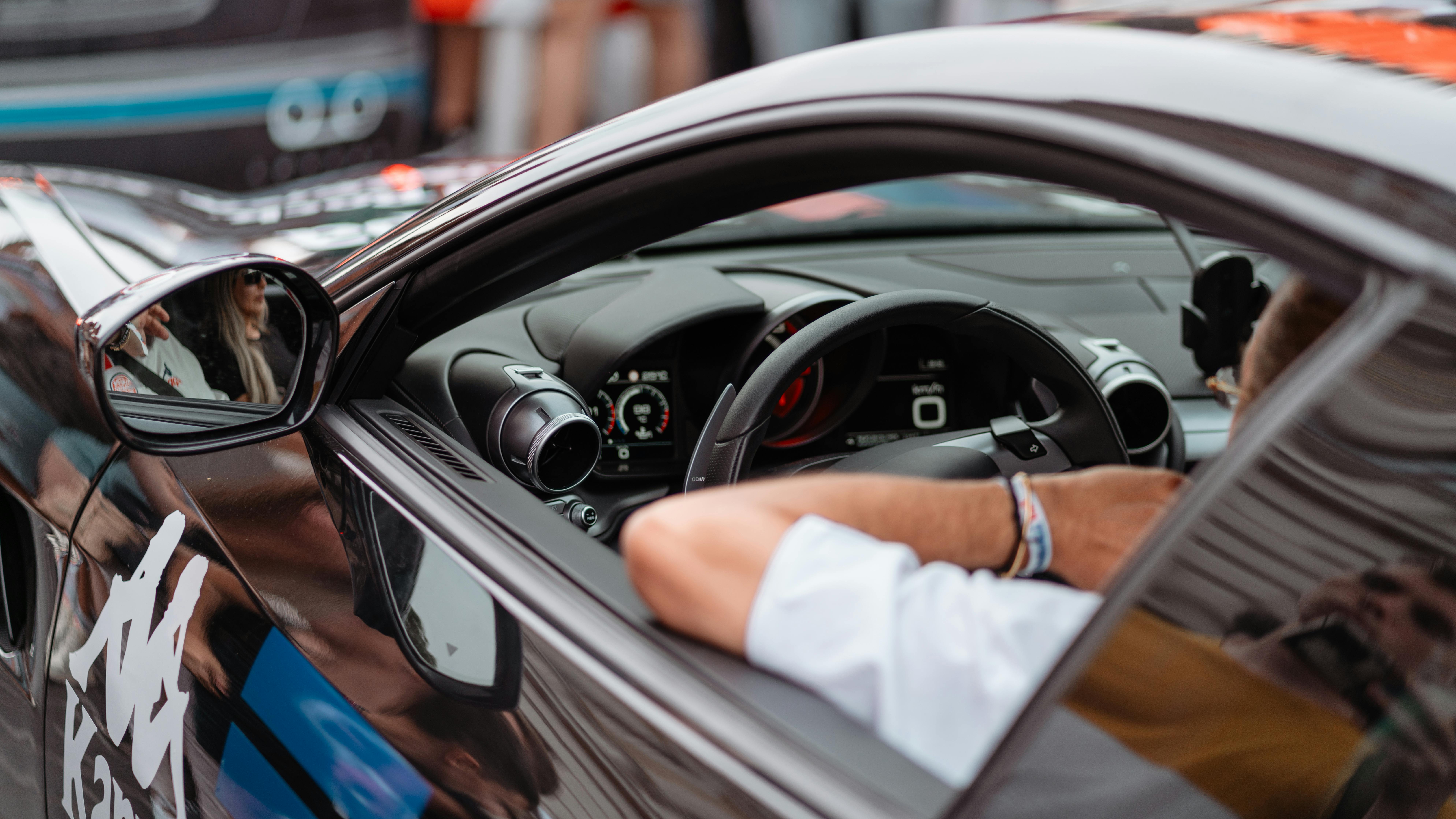
Discover the cutting-edge of automotive technology in 2026 with our deep dive into Level 2+ and Level 3 autonomous driving systems. We compare the top ADAS solutions from industry leaders like Tesla, GM, Ford, and Mercedes-Benz, helping you understand features, safety, and value. Find the best semi-autonomous car tech for your next vehicle purchase and navigate the future of driving with confidence.
Introduction to the Topic
Welcome to 2026, where the dream of a truly intelligent car is no longer a distant sci-fi fantasy, but a tangible reality on our roads. The automotive world is buzzing with advancements in Advanced Driver-Assistance Systems (ADAS), particularly the exhilarating leap into Level 2+ (L2+) and Level 3 (L3) autonomous driving. Forget cruise control; we're talking about sophisticated systems that can handle much of the heavy lifting, from navigating highways hands-free to managing complex traffic scenarios with minimal human intervention. This isn't just about convenience; it's about redefining safety, efficiency, and the sheer joy of driving. As more manufacturers roll out their cutting-edge solutions, understanding the nuances of these technologies becomes paramount for anyone looking to invest in a new vehicle. Are you ready to discover which system truly leads the pack and how it can transform your daily commute or next road trip? Let's dive into the future, today.
Backgrounds & Facts
To truly appreciate the L2+ and L3 revolution, it's essential to grasp the established SAE International's Levels of Driving Automation. Level 0 is no automation, Level 1 offers basic assistance (like adaptive cruise control), and Level 2 provides partial automation, where the vehicle controls both steering and acceleration/deceleration under specific conditions, but the driver must remain engaged and ready to take over. By 2026, the real game-changers are L2+ and L3.
Level 2+ (L2+): While technically still Level 2, L2+ systems push the boundaries significantly. They offer extended hands-free operation on mapped highways, often with automatic lane changes and more sophisticated traffic jam assist. The key distinction remains: the driver is still responsible for monitoring the environment and responding to system requests for takeover.
Level 3 (L3): This is where things get truly exciting. L3 systems allow the driver to completely disengage from the driving task under specific operational design domains (ODDs), such as on certain highways or in traffic jams. The car monitors the environment and will prompt the driver to take over when the ODD is no longer met or if an emergency arises. If the driver fails to respond, the system is designed to perform a minimal risk maneuver (e.g., safely pull over). This 'eyes-off' capability is a monumental leap, shifting liability and responsibility in certain scenarios.
The technological backbone for these systems is a complex symphony of sensors and artificial intelligence. High-resolution cameras provide visual data, radar sensors detect distance and speed, ultrasonic sensors assist with parking, and crucially, LiDAR (Light Detection and Ranging) systems are becoming standard for L3 and beyond, offering unparalleled 3D environmental mapping. This sensor fusion, combined with advanced AI algorithms and powerful onboard computing, allows vehicles to perceive, predict, and react to their surroundings with increasing precision, paving the way for safer, more relaxed journeys.
Expert Opinion / Analysis
The rapid evolution of L2+ and L3 ADAS isn't without its complexities and debates. Dr. Anya Sharma, a leading automotive safety expert at the Global Institute for Intelligent Transport, highlights the critical challenges: "While the technology is advancing at an incredible pace, the biggest hurdle remains the 'handoff problem' at L3. Ensuring the driver is ready and able to take control safely and promptly after a period of disengagement is paramount. We're seeing robust driver monitoring systems (DMS) — using infrared cameras to track driver gaze and alertness — becoming standard, but human factors will always be a variable."
Regulatory bodies across the globe are scrambling to keep pace. In 2026, several jurisdictions in Europe, parts of Asia, and select U.S. states have approved L3 systems for public use under strict conditions. "Harmonizing these regulations globally is crucial for mass adoption and consumer confidence," states Mark Chen, an analyst at AutoTech Insights. "Manufacturers are investing billions, but legal frameworks surrounding liability in L3 incidents are still evolving, which can influence market rollout strategies and consumer uptake. Expect to see more clarity on this front in the next 12-18 months, potentially unlocking wider L3 availability."
The economic impact is also significant. These advanced systems are premium features, often bundled into higher trim levels or offered as costly subscription services. "The subscription model for advanced ADAS features is a growing trend we predict will dominate the market by 2030," Chen adds. "It allows manufacturers to generate recurring revenue and offer over-the-air updates for continuous improvement, but consumers need to weigh the long-term costs." Ultimately, the goal is a safer, more efficient driving experience, but the path forward requires careful navigation of technology, regulation, and consumer education.
💰 Best Options in Comparison (VERY IMPORTANT)
As of 2026, several key players have established themselves at the forefront of L2+ and L3 autonomous driving technology. Choosing the 'best' often comes down to your specific needs, driving environment, and budget. Here’s a comparison of the leading systems that are reshaping how we drive:
-
Tesla Full Self-Driving (FSD) Beta
Tesla's FSD continues to push the boundaries with its camera-only vision system. While still technically L2+, FSD Beta aims for urban autonomous driving and highway navigation without intervention. It learns from billions of miles driven, constantly improving via over-the-air updates. FSD offers impressive capabilities like navigating city streets, making turns, and interacting with traffic lights and stop signs. However, it still requires the driver to be attentive and ready to intervene, as occasional 'disengagements' can occur. It's offered as a significant upfront purchase or a monthly subscription, appealing to early adopters willing to participate in its ongoing development.
-
GM Super Cruise (L2+)
General Motors' Super Cruise is renowned for its smooth, reliable hands-free highway driving. Available on an expanding network of pre-mapped divided highways (over 400,000 miles in North America by 2026), it allows drivers to remove their hands from the wheel under specific conditions. Super Cruise includes automatic lane changing and works seamlessly with adaptive cruise control. Its driver attention system is robust, using an infrared camera to ensure the driver's eyes are on the road. Super Cruise is generally considered one of the most polished L2+ systems for highway use, often available on Cadillac, Chevrolet, GMC, and BrightDrop models.
-
Ford BlueCruise (L2+)
Ford's BlueCruise offers a similar hands-free driving experience to Super Cruise, operating on a growing network of 'Hands-Free Blue Zones' (over 130,000 miles in North America). It leverages a forward-facing camera and radar sensors, combined with a sophisticated driver monitoring system. BlueCruise distinguishes itself with its natural lane centering and predictive speed adjustments. It's available on popular models like the F-150, Mustang Mach-E, and Expedition, often requiring a subscription after an initial trial period, making it a strong contender for Ford loyalists seeking advanced convenience.
-
Mercedes-Benz DRIVE PILOT (L3)
Mercedes-Benz is a pioneer in L3 autonomy with its DRIVE PILOT system. Approved for use in Germany and parts of the U.S. (e.g., Nevada, California) under specific conditions, DRIVE PILOT allows for 'eyes-off' driving in heavy traffic on suitable highway sections at speeds up to 40 mph (60 km/h). The system takes legal responsibility when active, a monumental shift. It uses an array of advanced sensors including LiDAR, radar, cameras, and even a wetness sensor in the wheel well. This sophisticated setup provides a robust safety net. DRIVE PILOT is available on select S-Class and EQS models, often as a high-tier optional package, setting the benchmark for true Level 3 functionality.
To help you make an informed decision, here's a comparative table of these leading systems:
| Feature/System | Tesla FSD Beta | GM Super Cruise | Ford BlueCruise | Mercedes-Benz DRIVE PILOT |
|---|---|---|---|---|
| Autonomy Level | Advanced L2+ (aiming for L3+) | L2+ | L2+ | True L3 |
| Hands-Free Operation | Yes (on most roads, with driver supervision) | Yes (on mapped highways) | Yes (on mapped 'Blue Zones') | Yes (on approved highways, up to 40 mph, eyes-off) |
| Eyes-Off Driving | No (driver must monitor) | No (driver must monitor) | No (driver must monitor) | Yes (under specific ODDs) |
| Sensor Suite | Cameras only (Tesla Vision) | Cameras, Radar, GPS, Driver Monitor | Cameras, Radar, Driver Monitor | LiDAR, Cameras, Radar, Ultrasonic, GPS, Driver Monitor |
| Availability (2026) | Most Tesla models | Cadillac, Chevrolet, GMC, BrightDrop | F-150, Mach-E, Expedition, Navigator, etc. | S-Class, EQS (select markets) |
| Typical Cost | High upfront purchase or monthly subscription | Optional package, subscription after trial | Optional package, subscription after trial | High-tier optional package |
| Key Benefit | Broad capability, continuous OTA updates, urban focus | Reliable, polished highway hands-free, vast mapped network | Intuitive highway hands-free, strong brand integration | Legal liability shift, true 'eyes-off' for specific scenarios |
Ready to experience the future of driving? Explore models equipped with these advanced systems! Click here to compare available vehicles and find local dealer offers. Get a personalized quote and book a test drive to feel the difference yourself!
Outlook & Trends
The trajectory for L2+ and L3 ADAS is steep and exciting. By the end of the decade, we anticipate several key trends dominating the landscape. Firstly, the expansion of operational design domains (ODDs) for L3 systems will be significant. As regulatory frameworks mature and technology proves its reliability, we'll see L3 functionality extend to higher speeds, more complex urban environments, and a broader range of weather conditions. Secondly, the integration of V2X (Vehicle-to-Everything) communication will supercharge these systems. Cars will communicate not just with each other (V2V) but with traffic infrastructure (V2I) and even pedestrians' devices (V2P), creating an incredibly rich, predictive environment that enhances safety and efficiency beyond what current sensor suites can achieve alone.
Expect to see subscription models for ADAS features become the norm, offering flexibility and continuous software upgrades. The push towards L4 (full self-driving in specific ODDs without human intervention) will accelerate, with L3 serving as a crucial stepping stone. Finally, the user experience within these vehicles will evolve, with interiors designed for 'eyes-off' scenarios, allowing for productive work, entertainment, or simply relaxation during autonomous stretches. The future of driving promises not just convenience, but a fundamental reimagining of our time spent on the road.
Conclusion
The year 2026 marks a pivotal moment in automotive history, with L2+ and L3 autonomous driving technologies transforming our perception of what a car can do. From Tesla's ambitious FSD to GM's refined Super Cruise, Ford's intuitive BlueCruise, and Mercedes-Benz's groundbreaking DRIVE PILOT, the options for enhanced driving are more sophisticated than ever. While each system offers unique strengths, they all converge on a singular goal: to make driving safer, more efficient, and ultimately, more enjoyable. As you consider your next vehicle, understanding these distinctions is key to making an investment that aligns with the future. Embrace the hands-off revolution and drive into tomorrow with confidence. Start your journey towards a smarter car today!