
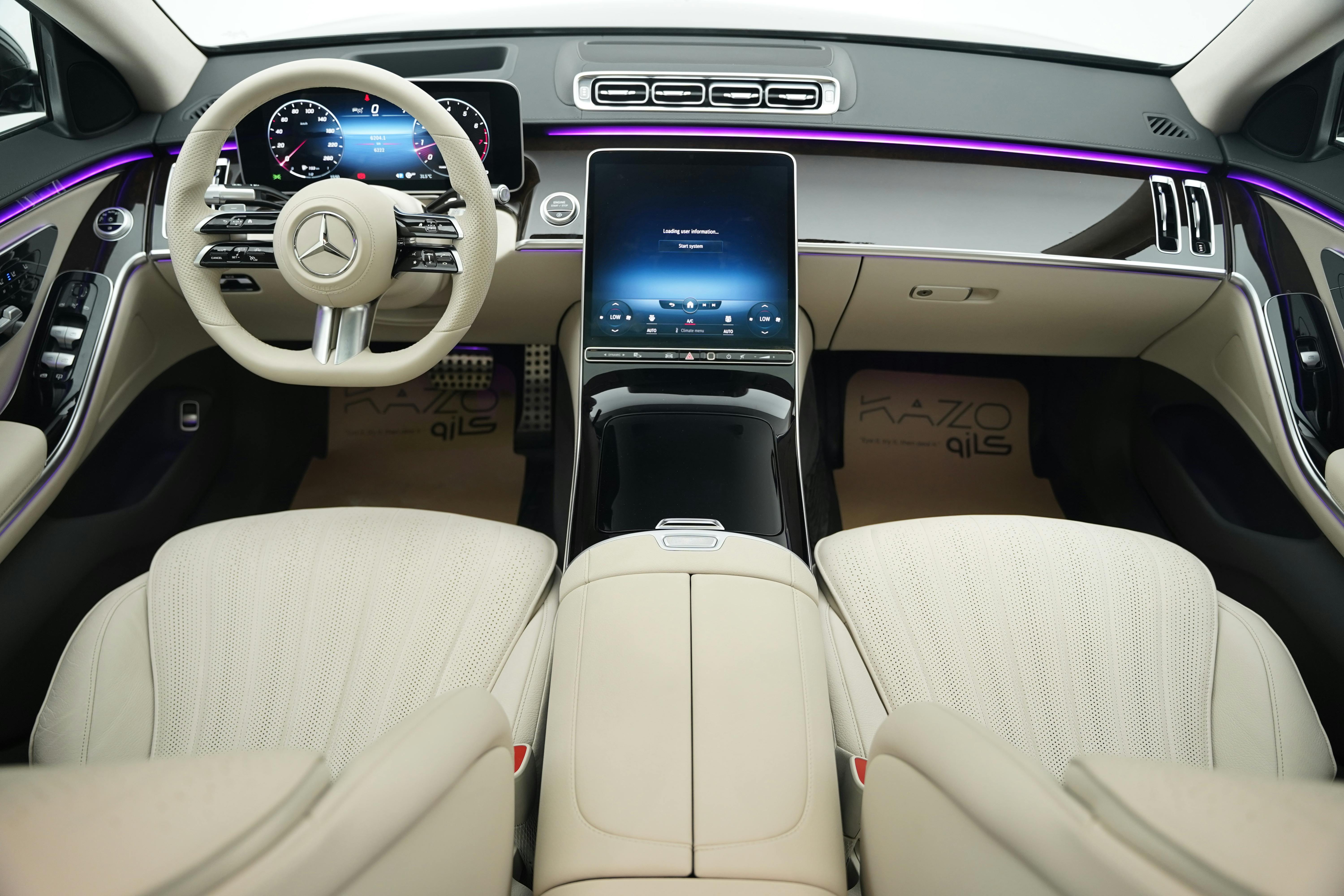
In 2026, Advanced Driver-Assistance Systems (ADAS) are redefining the driving experience, blending safety with unparalleled convenience. From Level 2 hands-on systems to the emerging Level 3 conditional autonomy, this guide dives deep into the top semi-autonomous driving technologies, comparing Tesla Autopilot, GM Super Cruise, Ford BlueCruise, Mercedes-Benz Drive Pilot, and BMW Driving Assistant Professional. Discover which ADAS features offer the best value, enhance safety, and pave the way for a truly connected journey, optimizing your next car purchase.
Introduction to the Topic
Imagine cruising down the highway, your hands gently resting on your lap, your vehicle effortlessly maintaining its lane, adjusting speed, and even executing safe lane changes. This isn't science fiction anymore; it's the daily reality for millions of drivers in 2026, thanks to the revolutionary advancements in Advanced Driver-Assistance Systems (ADAS). The automotive world is undergoing a profound transformation, moving beyond mere convenience features to sophisticated semi-autonomous driving capabilities that promise enhanced safety, reduced driver fatigue, and a more enjoyable commute. But with a dizzying array of proprietary systems and marketing jargon, how do you discern which technologies truly deliver on their promise? Is truly hands-free driving a reality, or still a distant dream requiring constant vigilance?
At bikeslovezone.com, we understand that whether you're a cycling enthusiast or a car owner, the future of mobility impacts us all. In this comprehensive guide, we cut through the noise to bring you an in-depth look at the leading semi-autonomous driving systems available in new vehicles for 2026. We'll explore what these cutting-edge ADAS features offer, compare their strengths and limitations, and provide crucial insights to help you make an informed purchasing decision for your next car. Get ready to navigate the future of driving with confidence.
Backgrounds & Facts
Advanced Driver-Assistance Systems (ADAS) are a suite of intelligent technologies designed to assist drivers, mitigate accidents, and enhance the overall driving experience. Their evolution has been rapid, moving from basic safety features like Anti-lock Braking Systems (ABS) and Electronic Stability Control (ESC) decades ago, to today's complex sensor-fusion systems. In 2026, ADAS is no longer a luxury but a standard expectation in many new vehicles, significantly contributing to collision avoidance and driver comfort.
Understanding the SAE International's Levels of Driving Automation is crucial for distinguishing between these systems:
- Level 0 (No Automation): The human driver does everything.
- Level 1 (Driver Assistance): The vehicle has either steering OR acceleration/braking support (e.g., Adaptive Cruise Control or Lane Keeping Assist).
- Level 2 (Partial Automation): The vehicle can control both steering AND acceleration/braking simultaneously, but the driver must remain engaged and supervise the system at all times (hands-on, eyes-on). Most advanced systems currently fall into this category, often referred to as L2+.
- Level 3 (Conditional Automation): Under specific conditions (e.g., traffic jams on highways), the vehicle can perform all driving tasks, and the driver is not required to monitor the environment (eyes-off, mind-off for short periods). However, the system will request the driver to take over when conditions exceed its operational design domain, and the driver must be ready to intervene. This is the critical leap toward true autonomy.
- Level 4 (High Automation): The vehicle can perform all driving tasks and monitor the driving environment under specific conditions, without human intervention. If the system encounters a situation it cannot handle, it will safely pull over.
- Level 5 (Full Automation): The vehicle can perform all driving tasks in all conditions, equivalent to a human driver.
Currently, the market is dominated by sophisticated Level 2 and emerging Level 3 systems. These technologies leverage an array of sensors—cameras, radar, lidar, and ultrasonic—to create a real-time understanding of the vehicle's surroundings. The benefits are clear: studies in 2025 showed a significant reduction in rear-end collisions and lane departure incidents in vehicles equipped with comprehensive ADAS packages, leading to safer roads for everyone, including cyclists and pedestrians.
Expert Opinion / Analysis
"The evolution of ADAS from mere assistance to semi-autonomous driving is one of the most exciting and challenging frontiers in automotive engineering," states Dr. Anya Sharma, lead automotive tech analyst at the FutureDrive Institute. "In 2026, we're witnessing a critical juncture where the human-machine interface becomes paramount. The key isn't just how well the system drives, but how intuitively and safely it communicates with the human driver, especially when requesting a takeover."
One of the biggest debates revolves around the transition from Level 2 to Level 3. Dr. Sharma elaborates, "Level 2 systems, even with hands-free capabilities, are fundamentally 'eyes-on, mind-on.' The driver is still the primary operator. Level 3, however, introduces the concept of 'eyes-off, mind-off' under specific, limited conditions. This psychological shift requires immense trust in the technology and robust fail-safes. The industry is grappling with regulatory hurdles and public perception, as any misunderstanding of these capabilities can have severe consequences."
From a safety perspective, experts agree that well-implemented ADAS reduces human error, which is responsible for over 90% of all accidents. "These systems are like having an ever-vigilant co-pilot, constantly scanning for threats that a distracted or fatigued human might miss," notes Mark Thompson, a road safety advocate and former traffic engineer. "However, there's a fine line between assistance and over-reliance. Driver education is as critical as technological advancement. For cyclists, the promise of V2X (Vehicle-to-Everything) communication, integrated with advanced ADAS, could mean cars 'seeing' and reacting to bikes long before a human driver might, creating a much safer urban environment for all road users." The ethical implications, such as who is responsible in an L3 incident, are also driving intense legal and philosophical discussions, shaping the future landscape of autonomous driving.
💰 Best Options in Comparison (VERY IMPORTANT)
Choosing the right semi-autonomous driving system can be a game-changer for your daily commute and long-distance travel. Here are the leading ADAS offerings in 2026, designed to boost your confidence and comfort on the road:
Tesla Autopilot / Full Self-Driving (FSD) Beta
Tesla's system, often at the forefront of public discussion, continues to evolve rapidly through its frequent over-the-air (OTA) updates. Autopilot includes Traffic-Aware Cruise Control and Autosteer, which keeps the car centered in its lane. The optional Full Self-Driving (FSD) Beta package adds features like Auto Lane Change, Summon, Autopark, and, most notably, navigation on city streets. While Tesla markets FSD as 'full self-driving,' it remains a Level 2+ system in 2026, requiring active driver supervision (hands-on, eyes-on) at all times. Its strength lies in its extensive use of cameras and a neural network AI, constantly learning and improving. However, the 'beta' designation means some features are still works in progress, and the system can occasionally make unexpected maneuvers, demanding driver readiness.
General Motors Super Cruise
GM's Super Cruise is widely recognized for its polished execution of hands-free driving on pre-mapped highways. Available across Cadillac, Chevrolet, GMC, and Hummer EV models, Super Cruise allows drivers to remove their hands from the wheel for extended periods on over 400,000 miles of compatible roads in North America. Its sophisticated driver attention system, using an infrared camera, ensures the driver's eyes remain focused on the road, making it a robust Level 2+ system. It also features automatic lane change and trailering assist. Super Cruise excels in providing a smooth, confident, and genuinely relaxing highway driving experience, though its functionality is limited to these mapped routes and typically requires a subscription after an initial trial period.
Ford BlueCruise
Ford's answer to hands-free highway driving, BlueCruise, offers a similar Level 2+ experience to Super Cruise. Operating on designated "Blue Zones"—a rapidly expanding network of over 130,000 miles of divided highways across North America—BlueCruise allows for hands-free driving with an attentive driver. It integrates adaptive cruise control, lane centering, and predictive speed assist, using a driver-facing camera to monitor eye gaze. BlueCruise is praised for its intuitive interface and seamless operation, making long highway journeys significantly less fatiguing. Like Super Cruise, it is geo-fenced to specific highways and often comes with a subscription model after an initial trial.
Mercedes-Benz DRIVE PILOT
Mercedes-Benz has achieved a significant milestone with DRIVE PILOT, the first internationally certified Level 3 conditional autonomous driving system available to consumers in select markets (e.g., Germany, Nevada, California). This system allows the driver to legally disengage from the driving task and engage in secondary activities (e.g., watching a movie, checking emails) under specific, limited conditions: typically in heavy traffic on approved highways at speeds up to 40 mph (60 km/h). DRIVE PILOT leverages a robust sensor suite, including lidar, to ensure high reliability. When conditions exceed its operational domain, the system provides ample warning for the driver to take over. While revolutionary, its high cost, geo-fencing, and speed limitations mean it's a niche, premium offering for now, but a clear indicator of the future.
BMW Driving Assistant Professional
BMW's Driving Assistant Professional package offers a comprehensive suite of Level 2+ ADAS features aimed at enhancing both safety and convenience. Key components include the Extended Traffic Jam Assistant, allowing for hands-free driving in stop-and-go traffic up to 37 mph (60 km/h) on limited access highways, Adaptive Cruise Control with Stop&Go, Lane Keeping Assistant, and Evasion Aid. BMW's system is lauded for its intuitive controls and seamless integration, providing a highly refined and user-friendly experience. While not a Level 3 system, it offers one of the most sophisticated and reliable Level 2+ hands-off capabilities, keeping the driver engaged but significantly reducing fatigue on long journeys and in congested urban environments.
Here's a comparison table to help you weigh your options:
| System | Autonomy Level (SAE) | Hands-Free Capability | Eyes-Off Capability | Primary Use Case | Key Differentiating Feature | Estimated Cost (2026) |
|---|---|---|---|---|---|---|
| Tesla Autopilot / FSD Beta | L2 / L2+ | Yes (Autosteer) | No (eyes-on) | Highway & City Driving | Frequent OTA updates, neural network AI | Base AP: Standard; FSD: $15,000+ |
| GM Super Cruise | L2+ | Yes | No (eyes-on) | Pre-mapped Highways | Robust driver attention system | $2,500 - $3,000 + subscription |
| Ford BlueCruise | L2+ | Yes | No (eyes-on) | Pre-mapped Highways ("Blue Zones") | Expanding road network, intuitive | $2,100 - $2,600 + subscription |
| Mercedes-Benz DRIVE PILOT | L3 | Yes | Yes (conditional) | Traffic Jams (limited speed/geo) | Certified L3, driver disengagement | $7,000 - $8,500 (option) |
| BMW Driving Assistant Pro | L2+ | Yes (Traffic Jam Assist) | No (eyes-on) | Highway & Traffic Jams | Refined integration, intuitive controls | $1,700 - $2,200 (package) |
Outlook & Trends
The journey towards full autonomy is far from over. Looking beyond 2026, the automotive industry is poised for even more transformative changes. We anticipate a continued expansion of Level 3 systems like Mercedes-Benz DRIVE PILOT, with more manufacturers gaining regulatory approval and extending their operational domains. The focus will increasingly shift towards Level 4 high automation, where vehicles can handle all driving tasks within specific geographic areas or conditions without human intervention. This will likely first appear in commercial applications like robotaxis and logistics, before trickling down to private ownership.
Key technological advancements will include enhanced sensor fusion, with lidar becoming more commonplace and affordable, alongside improved AI algorithms that can better predict human behavior and navigate complex, unstructured environments. Vehicle-to-Everything (V2X) communication will also play a pivotal role, allowing cars to communicate with each other (V2V), infrastructure (V2I) like traffic lights, and even vulnerable road users (V2P) such as cyclists and pedestrians. This interconnectedness promises to dramatically improve road safety and optimize traffic flow, benefiting everyone sharing the road.
Regulatory harmonization across different countries will be crucial for the widespread adoption of higher levels of autonomy. Furthermore, the impact on urban planning cannot be overstated. With autonomous vehicles potentially reducing the need for parking and enabling shared mobility fleets, cities could be reimagined to prioritize public transport, green spaces, and active mobility options like cycling, aligning perfectly with the mission of bikeslovezone.com. The future promises not just smarter cars, but smarter, safer cities.
Conclusion
In 2026, Advanced Driver-Assistance Systems have moved beyond novelty to become indispensable tools that enhance safety, reduce driver stress, and usher in a new era of personal mobility. From the sophisticated Level 2+ hands-free highway assistants offered by GM and Ford, to Tesla's continuously evolving AI-driven FSD Beta, and Mercedes-Benz's groundbreaking certified Level 3 DRIVE PILOT, the options for a more automated driving experience are richer than ever. These aren't just gadgets; they are sophisticated co-pilots, constantly working to make your journey safer and more comfortable.
When considering your next vehicle purchase, prioritizing these advanced semi-autonomous features is a smart investment in your safety and peace of mind. Evaluate your driving habits—do you spend hours on the highway, or are you frequently stuck in city traffic? Your answers will guide you toward the system that best suits your needs. The road ahead is increasingly intelligent, connected, and safer for all users. Embrace the future of driving, and choose the ADAS system that powers your journey forward.